Falls aren't a normal part of aging, even though the risk rises with age. According to the CDC, more than one out of four older adults falls each year, yet less than half tell their doctor — and falling once doubles your chances of falling again. Each year in the U.S. there are roughly 3 million emergency department visits and about 41,000 deaths related to older-adult falls.
But the CDC and the National Institute on Aging are clear: many falls can be prevented. Exercise, medication review, vision and hearing checks, and simple home changes are the most effective steps. Here's the home part — eleven low-cost changes, room by room.
Why the home matters
The NIA notes that many falls happen at home, "where we spend much of our time and tend to move around without thinking about our safety." That's exactly why small environmental changes pay off: they remove the hazards you stop noticing. About one in ten falls leads to an injury that restricts activity for a day or more or requires medical attention, so the payoff of preventing even one fall is meaningful.
The bathroom — start here
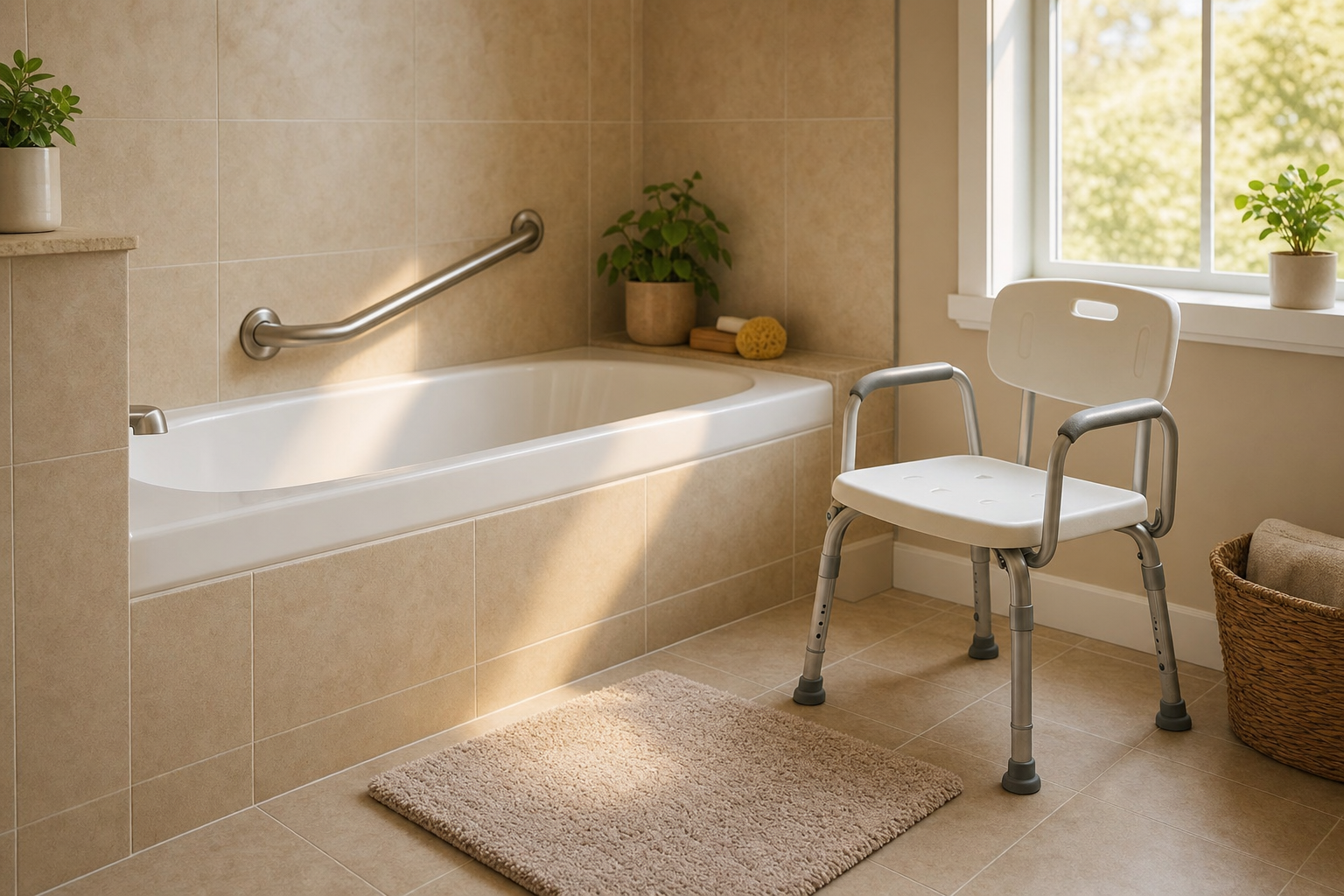
The bathroom is the most common room for serious falls, thanks to wet surfaces and the balance challenges of stepping in and out of a tub. The NIA specifically recommends installing grab bars and using non-slip mats.
- Add grab bars. Mount them inside and just outside the tub or shower, and next to the toilet. Don't rely on a towel bar — it isn't built to hold body weight.
- Use a non-slip mat or strips in the tub and on the bathroom floor. A wet bath mat that slides is a common trip hazard.
- Consider a shower chair or bench and a handheld showerhead if standing for long is tiring or unsteady.
- Raised toilet seat with armrests reduces the strength and balance needed to sit and stand.
Floors and walkways
- Secure or remove loose rugs. Throw rugs are one of the most frequent trip hazards. Use double-sided carpet tape or a non-slip backing — or remove them entirely.
- Clear pathways of cords, clutter, and low furniture you could trip over — especially the route between the bed and the bathroom at night.
- Fix uneven thresholds, loose floorboards, or curled carpet edges that catch a foot.
Lighting
Poor lighting is a major, fixable risk. The NIA recommends good lighting with switches at the top and bottom of stairs and on each end of a long hallway.
- Use night lights in the bedroom, hallway, and bathroom — the NIA lists night lights as a core prevention step.
- Add motion-sensor lights along the path to the bathroom.
- Keep a lamp within easy reach of the bed so you're never crossing a dark room.
Stairs
- Ensure sturdy handrails on both sides of any stairs, and keep them secure.
- Don't let anything you're carrying block your view of the steps, and keep stairs free of objects.
Kitchen and storage
- Move frequently used items to waist or shoulder height so you're not reaching up or bending down — both raise fall and tip-over risk.
- Use a sturdy step stool with a handrail for anything out of reach; never stand on a chair.
Footwear and daily habits
- Wear supportive, non-slip footwear indoors — walking in socks or loose slippers is a common cause of slips.
- Stand up slowly to avoid dizziness. The NIA flags this as a simple, high-impact habit.
- Keep a phone or medical-alert device within reach at all times, in case a fall does happen.
Your 11-point home safety checklist
- Secure or remove loose throw rugs
- Add grab bars in and outside the tub/shower and near the toilet
- Put non-slip mats or strips in the tub and on the floor
- Install night lights along the path to the bathroom
- Add motion-sensor lights for hallways and stairs
- Keep a lamp within reach of the bed
- Ensure sturdy handrails on both sides of stairs
- Clear pathways of cords, clutter, and low furniture
- Move everyday items to waist/shoulder height
- Wear supportive, non-slip footwear indoors
- Keep a phone or alert device within easy reach
What to look for when shopping
When choosing products for home safety, prioritize weight-rated grab bars (look for ones rated to hold well over 250 lb, mounted into studs or with proper anchors), rubber-backed non-slip mats, and shower chairs with non-slip rubber feet and armrests. If an item feels flimsy or won't stay put, it's not safer than nothing. Product recommendations and affiliate links are coming soon — in the meantime, the categories above are exactly what to search for.
Share this checklist
If you have a parent, grandparent, or neighbor over 60, send this their way. Five minutes of reading could prevent a fall.
Back to Beacon YearsSources
- CDC — Facts About Falls (older adult fall statistics and prevention). cdc.gov/falls
- CDC STEADI — Patient & Caregiver Resources (Stopping Elderly Accidents, Deaths & Injuries). cdc.gov/steadi
- National Institute on Aging — Falls and Fractures in Older Adults: Causes and Prevention. nia.nih.gov
- National Institute on Aging — Preventing Falls at Home: Room by Room. nia.nih.gov
- National Institute on Aging — Six Tips to Help Prevent Falls. nia.nih.gov